
14
Formats in the comparison set
Takeaway windows, small rooms, fuel-stop kiosks, lodging lobby bars, and mixed counters we keep on one list so a first stop is matched to the day, not to a pretty interior.
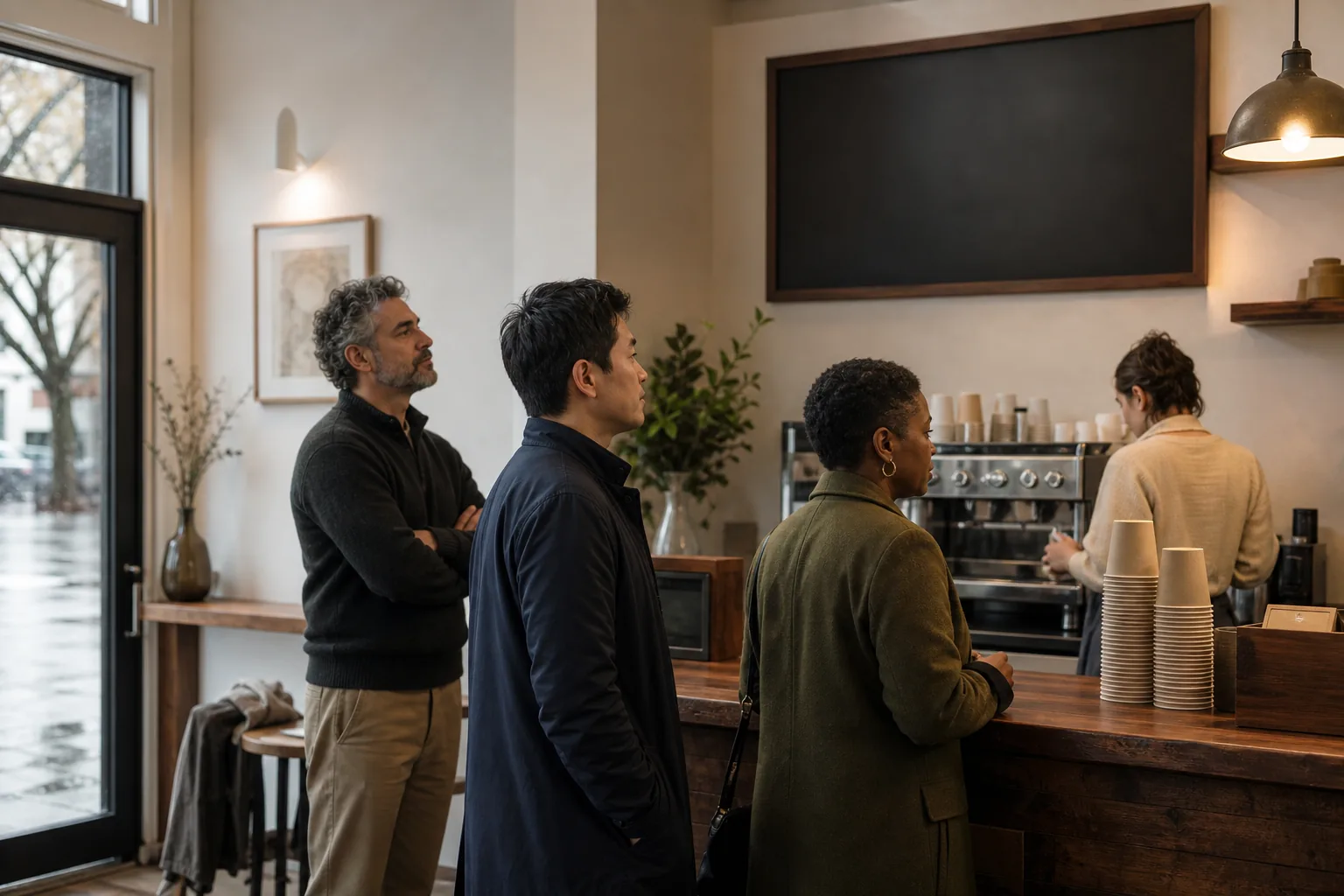
A cafe stop is a sequence, not a place to settle in for the day.
Regulars already know when to read the board, when to give a name, where to wait, and how long a table is meant to be used. Visitors often learn that order only after blocking the till or leaving a bag on a seat. We turn those quiet habits into clear briefs you can use before the next short stop.
Learn MoreWhy the stop looks different
A diner sends you to a booth and a person takes the order at the table. A grocery run is a basket, a checkout lane, and a bag you carry out. A cafe is closer to a workshop window: people arrive already in motion, they want water or coffee, and they expect the room to keep moving. That is why the same hour looks sharper here. You can see who studied the board before stepping up, who waits beside the pastry case instead of at the till, and who treats a window seat as a desk.
Formats change the furniture, not the underlying order. A takeaway window has almost no seating and a hard edge at the opening. A small room adds a few tables and a pickup shelf that guests watch themselves. A kiosk at a fuel stop is built for a cup you take back to a vehicle. A lobby bar near lodging often looks calmer, yet the same habits still apply: read, pay, step aside, collect, sit only if you mean to leave soon.
What the formats share is more useful than what they display. Someone still has to keep the line honest, someone still has to hear a name, and someone still has to clear a surface so the next guest can stand there. If you treat every cafe as a lounge, the room tells you otherwise: no spare chairs, a shelf that fills and empties, and a door that should not become a waiting room.
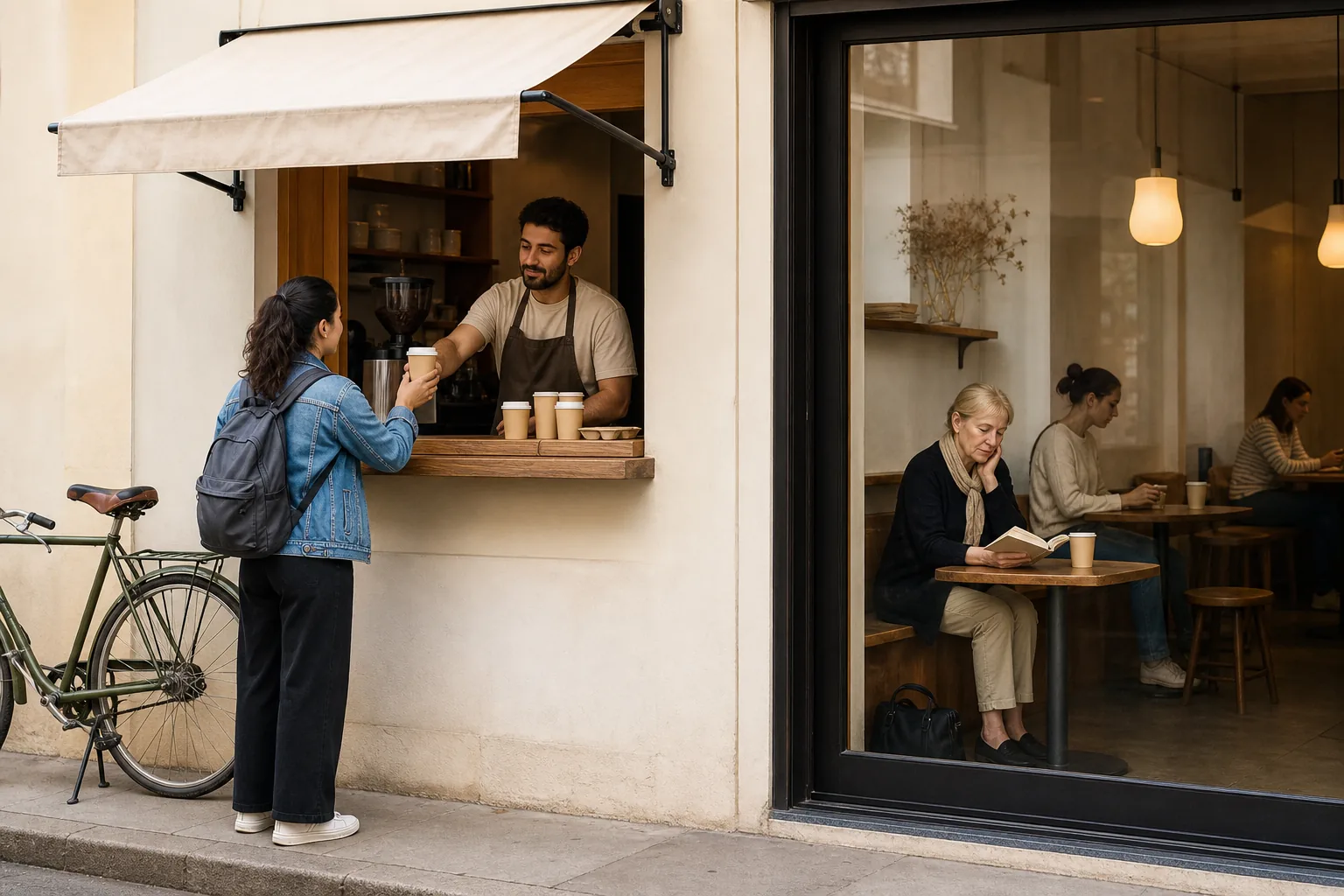
Unwritten order
The hard part for a visitor is rarely the drink list. It is the unspoken chain of actions that locals treat as obvious. We break that chain into steps you can rehearse before you open the door.
Stand in the actual queue, not beside the pastry case and not in the doorway. Use the wait to read the board. Changing your mind at the till forces everyone behind you to restart.
Many rooms start the cup while you are still one person back. Have the size, milk, and name ready. Questions about specials belong to the person already being served, not to the whole line.
After payment, move to the waiting spot the room is using that morning: a mark on the floor, a side wall, or a gap by the sugar station. Staying at the till is the most common way visitors stall the next order.
Names get misheard. Cups land on the left, then the right. Nobody will escort you to your drink. Face the pickup ledge, listen for the call, and take only the cup that matches.
From our trip notes
These numbers are planning cues from repeated cafe stops, not a scoreboard. Each one has a job: it tells you how many layouts we compare, how long a sit should stay, and where first-time mix-ups cluster.
14
Takeaway windows, small rooms, fuel-stop kiosks, lodging lobby bars, and mixed counters we keep on one list so a first stop is matched to the day, not to a pretty interior.
11
From reading the board in line to leaving the table clear. Most rooms skip posting this chain because regulars already move through it without talking.
6
A cue we use when someone wants to sit, not a rule printed on the wall. If the pause stretches, the honest option is takeaway or a later stop, not a laptop at a two-top.
9
Wrong name, cup on the far side of the ledge, waiting at the till, and taking a drink that was not called. The shelf is self-serve attention, not a second queue.

Table, power, door
A short sit is a rest for the shoulders, not a claim on the room. Put the bag on your lap or against your own chair. An empty seat with a jacket on it is read as occupied, and in a small room that is the difference between someone standing with a hot cup and someone finding a place. Phones on speaker and long unpacking at the sugar station do the same kind of harm: they turn shared space into a private desk.
Outlets are a separate trap. The wall seats fill first on wet mornings, and a charger left behind is treated as a reservation. If your stop is meant to be short, choose a table away from the sockets or skip the seat. Decide takeaway versus a room before you pay; changing after the cup is made sends you back through the shelf and often through the door with a lid that was never meant for a table.
The first stop of a trip should be the simplest format you can handle that day. A quiet lobby bar is kinder than a packed takeaway hatch if you still need to watch how names are called. Park in a legal short bay, keep one person with the vehicle if the doorway is tight, and do not rehearse the order in the entrance. Leave while the table still looks like a pause, not like luggage storage.
Stay only as long as the cup lasts. Clear crumbs, take the lid, and leave the seat empty for the next guest.
Power seats are not a workspace for a driving day. If you need a desk, plan a later stop that is built for that, or keep moving.
Choose before the till. A lid and a carrier mean you will not need a table; a ceramic cup means you will return it.
Use a short bay, keep the entrance clear, and pick a simpler cafe for the first stop if the hatch looks rushed.
The briefing team
We do not write from a studio floor plan. Each brief starts with a visit: where the line formed, how the name was called, and whether a table was even meant to be used.

Sequence Field Lead
Counter Sequence Field Certificate, Independent Guest-Flow Studio
Mara maps how a line actually forms and where people wait after they pay. Her notes mark the gap between the posted menu and the path regulars take without thinking.

Format Guide Editor
Service Layout Briefing Certificate, Route Format Workshop
Jonah compares takeaway hatches with small rooms and lodging lobby bars. He writes the format match: which room fits a rushed morning, and which one only looks calm.

First-Stop Briefing Specialist
First-Stop Briefing Certificate, Short Pause Practice Group
Asha prepares people who have never watched a named-cup shelf. Her briefs cover what to ask before going in and how to leave the table without turning a pause into a stay.
After a briefing
These are specific mix-ups, not polished success stories. The useful part is what changed in the next cafe visit.
If you want a first-stop plan for a coming trip, tell us how rushed the morning is, whether you need a seat, and who is traveling with you. We reply with a briefing, not a booking engine.
Request a ConsultationWe treat the cafe as a short pause in the route. The work is to show the unwritten order so a visitor can enter, order without stalling the line, sit only if it fits the day, and leave the table clear.
burbankitoid provides knowledge about cafe stops during travel and offers consultations on this part of a route. The pages are written so you can understand how a counter, a pickup shelf, and a short table usually work. They describe patterns we have seen; they are not a promise that any one room will match the last visit.
We do not give advice on diet, allergies, ingredients, or whether a drink is suitable for a health condition. Those questions belong with a qualified professional who knows your situation. A chalkboard changes, staff rotate, and a “usual” milk or syrup may be unavailable. Confirm details with the people behind the counter on the day you stop.
Opening hours, parking rules, whether seating exists, and how names are called can change between trips. A format that was calm at midday can be packed at first light. Check current conditions directly before you rely on an older note, including signs on the door and what the staff tell you in the line.
Any decision about where to stop, how long to sit, and how to travel is yours. burbankitoid is not responsible for delays, missed connections, or friction that follows a choice you make after reading this site. If you need a plan tailored to a specific itinerary, contact the team and treat the reply as a briefing to weigh, not as an instruction you must follow.