How to choose your first cafe stop of the trip
A first cafe stop works when the format matches your readiness. This guide shows how to choose a room you can finish on time without treating every counter like a lounge.
The first cafe stop of a trip sets the tone for every pause that follows. Travelers often choose by appearance: a bright chalkboard, a long window, a row of stools that look welcoming from the curb. Those signals matter less than whether the room matches how ready you are to move. A tired group with bags needs a different first door than a solo driver who only wants a lid and a clear exit.
Think of the stop as a short tool in the route, not a destination. The goal is a pause you can complete without blocking the till, the shelf, or the people behind you. When the first choice is too complex, the morning stretches, names get missed, and the next leg starts late. A simpler format protects the day even when the interior looks less impressive.
Match the room to the pressure of the morning
Before you open any door, name the constraints that already exist. How early are you leaving? Who is traveling with you? Do you need a seat, or only a cup you can carry? Is the vehicle in a short bay that cannot wait? Those answers decide the format. A packed takeaway hatch can still be the right pick if everyone is awake and the order is already decided. A quiet lodging lobby bar is kinder when someone is still learning how named cups are called.
Readiness is not about confidence with drinks. It is about attention. If you still need to watch how the line forms and where people wait after paying, choose a room with space to observe. If the day is already tight, choose the format that ends fastest, even if the seating looks sparse.
Pick the first stop for the pace you can keep, not for the photo you hope to take later.
Compare formats before you compare interiors
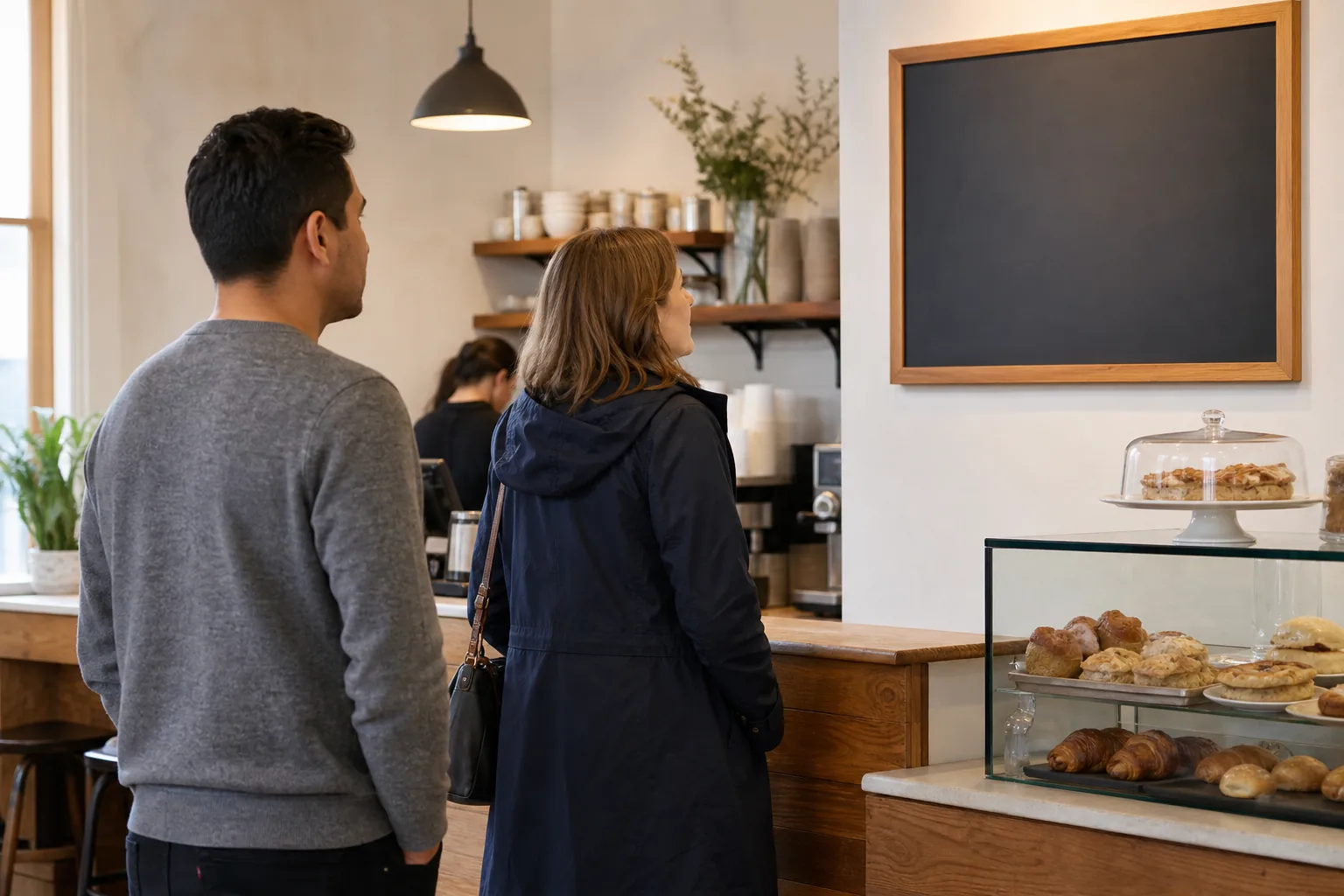
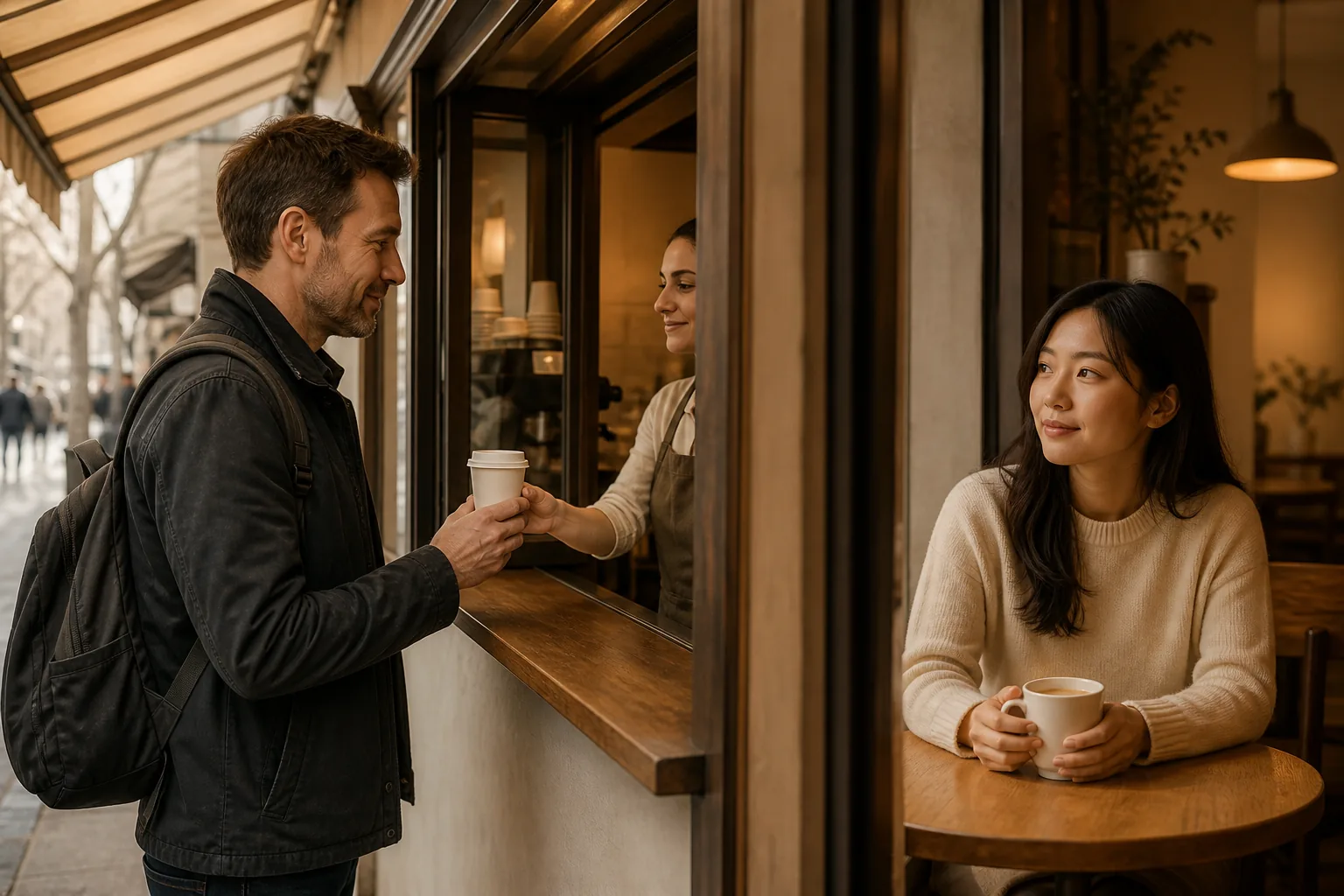
Four common layouts show up again and again. A takeaway hatch has almost no seating and a hard edge at the opening. A small indoor room adds a few tables and a pickup ledge that guests watch themselves. A fuel-stop kiosk is built for a cup that returns to a vehicle. A lodging lobby bar often feels calmer, yet the same unwritten order still applies: read, pay, step aside, collect, sit only if you mean to leave soon.
What the formats share is more useful than what they display. Someone still has to keep the line honest. Someone still has to hear a name. Someone still has to clear a surface so the next guest can stand there. If you treat every cafe as a lounge on the first morning, the room will correct you with missing chairs, a full shelf, and a doorway that should not become a waiting room.
A practical shortlist
- Choose a hatch when the day is a driving day and nobody needs a seat.
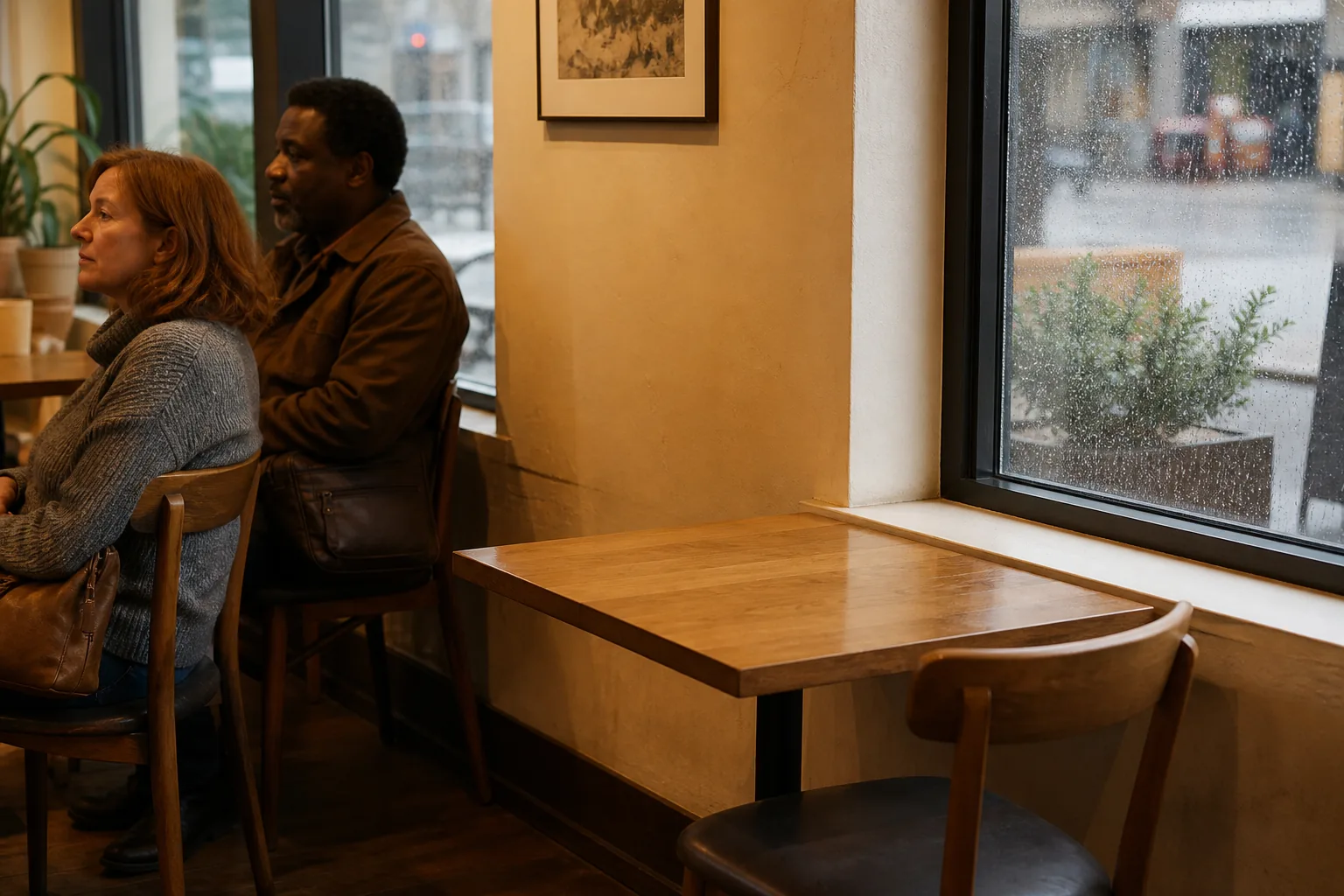
- Choose a small room when one person needs to sit briefly and the bags stay with you.
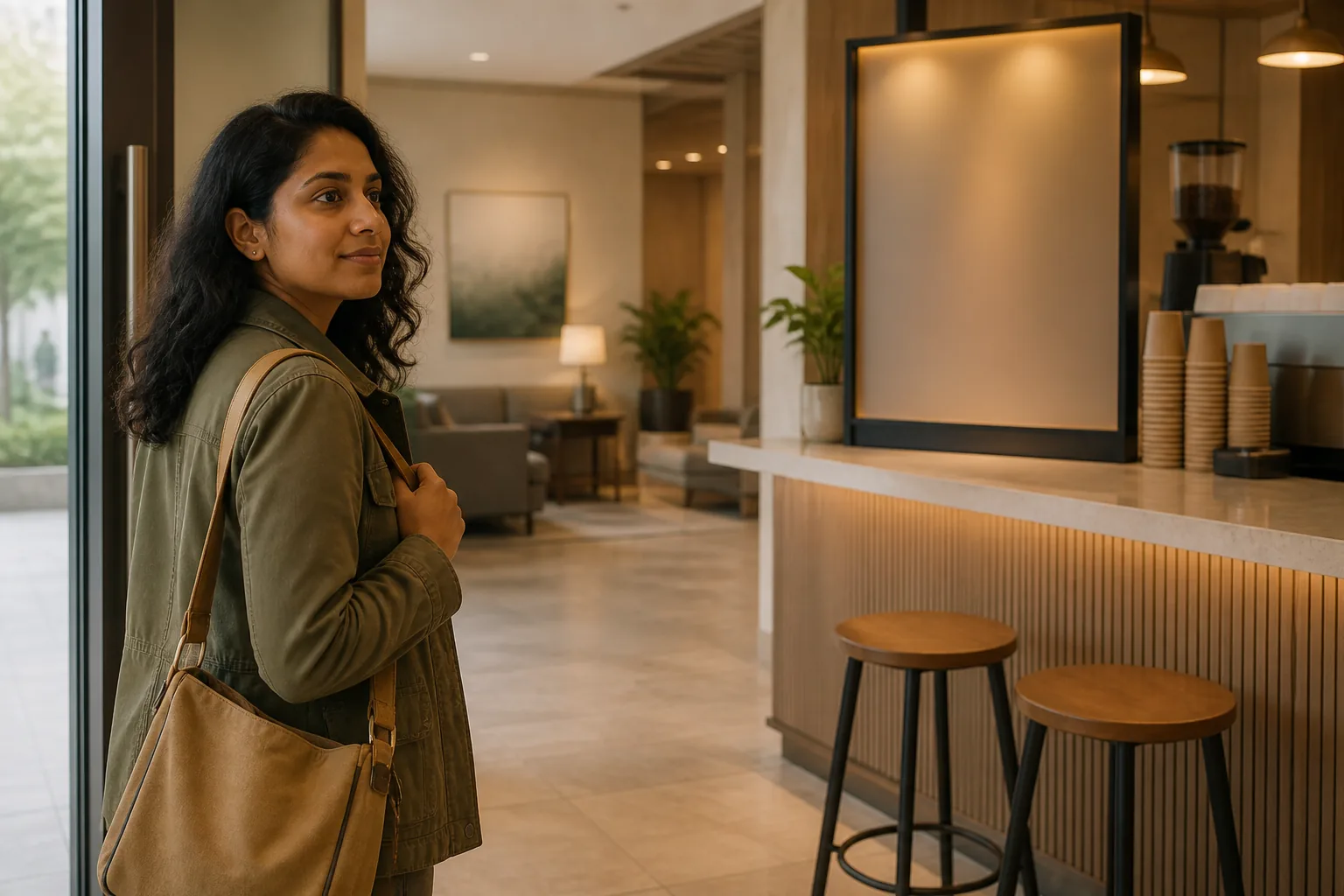
- Choose a lobby bar when the group is new to named-cup shelves and needs a clearer waiting mark.
- Skip a room that looks calm but parks the vehicle in a bay that blocks the entrance.
A five-step filter before you walk in
- State whether you need takeaway only or a short sit.
- Check whether the doorway is already a cluster of people debating orders.
- Look for a pickup shelf you can face after paying, not a till you will block.
- Decide who enters and who stays with the vehicle if the curb is tight.
- Set a leave cue: when the cup is empty, or when the bag feels like storage on a chair.
This filter is not a scorecard. It is a way to refuse a stop that will cost more time than it returns. A room can look perfect and still fail the filter if the line starts in the entrance or if every table is claimed by chargers. Walking past is not a failure. It is the first useful decision of the trip.
What to rehearse once the format is chosen
After you pick the room, rehearse the sequence, not the drink list. Know where the real queue begins. Finish reading the board before you reach the wood. Have a name ready. Plan where you will wait so the till stays clear. If you sit, keep bags on your lap or against your own chair. Leave while the table still looks like a pause.
Conditions change between trips. Hours, parking rules, and seating can shift overnight. Treat the first stop plan as a briefing you recheck at the door. If staff point you to a different waiting spot, follow them. The best first cafe is the one that lets you finish the pause and return to the route without leaving friction behind.
If you want a plan shaped around a specific morning, bring the constraints of your day to a consultation. We reply with a format match and a checklist, not with a booking promise. The room you meet that day still has the final word.