When to leave the seat clear
A short cafe sit ends when the table is empty again. Use clear leave cues for bags, outlets, and chairs so the next guest is not blocked by a pause that turned into storage.
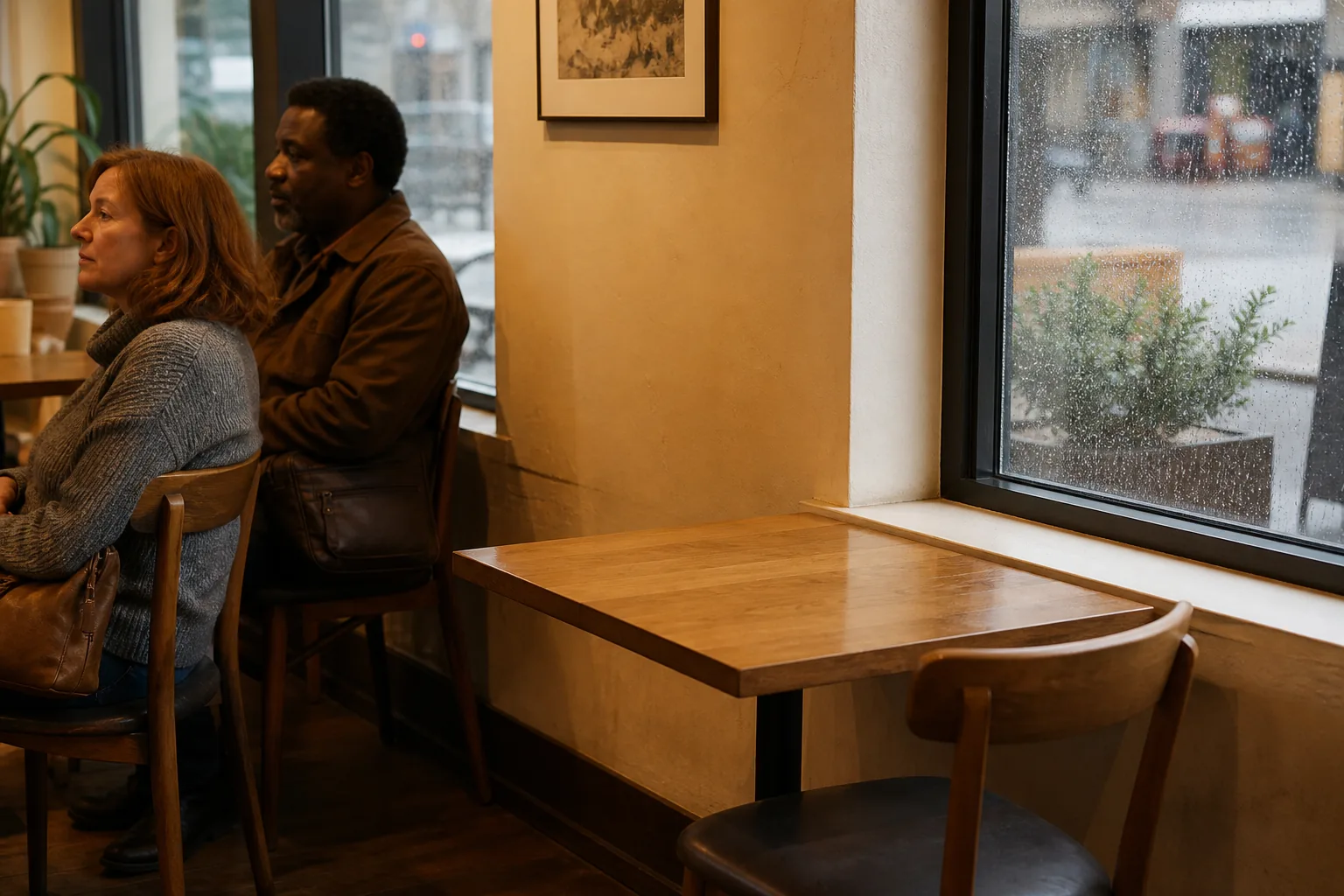
A short sit ends while the table still looks like a pause. The hard part is noticing the moment a rest turns into storage: a bag on the empty chair, a charger left as a reservation, a jacket holding a seat while someone stands at the shelf. Small rooms read those signals as occupied space, even when you plan to “be right back.”
Leaving on time is not about rushing the drink. It is about returning a shared surface to the next guest before your pause becomes furniture. This guide focuses on bags, outlets, and the quiet cues that tell you the sit has lasted long enough.
What “clear” looks like in a working cafe
A clear seat is empty of belongings and ready to wipe. The chair is pulled in. The cup is gone or returned. Nothing claims the neighboring place “for later.” When travelers leave a table half-claimed, people with hot cups stand because the room looks full on paper and empty in practice.
Keep your bag on your lap or against your own chair. Phones on speaker and long unpacking at the sugar station do the same kind of harm: they turn shared space into a private desk. The room does not need a speech about manners. It needs the surface back.
If the table still holds your life while you are elsewhere in the room, you have already overstayed the pause.
Outlets are a separate trap
Power seats fill first on wet mornings. A charger left behind is treated as a reservation even when the person is still at the pickup ledge. If your stop is meant to be short, choose a table away from sockets or skip the sit. A laptop “for a minute” rarely stays a minute when the route feels unfinished.
Leave cues that work in real rooms
- The cup is empty and the lid is back on for the walk out.
- Someone is standing with a drink and no place to land nearby.
- Your bag has migrated onto a second chair without you noticing.
- You are waiting on a message that does not require a cafe table to finish.
A simple exit sequence
- Gather every item before you stand, including the charger if you used one.
- Return ceramic or clear disposable lids so the surface can be wiped.
- Pull the chair in and check that no jacket still claims the seat.
- Move fully away from the table before you reorganize the bag near the door.
- Keep the entrance clear while you decide the next step of the route.
Do not rebuild the bag on the table after you have already stood to leave. That second wave of unpacking is how a finished pause starts again. Step aside, then sort. The next guest should meet wood, not your half packed day.
When plans change mid-sit
Sometimes the morning shifts and you need longer than a short pause. The honest options are takeaway for the next drink, a later stop built for work, or leaving now and returning when the room is less tight. Stretching a travel sit into storage helps no one, including you, because the friction follows you to the door.
Staff may ask you to consolidate belongings or free a seat during a rush. Treat that as the live rule for the day. Briefs can prepare you. The people behind the counter decide what the room needs in the moment. Leaving the seat clear is how a traveler stays welcome in spaces that only work when guests keep moving.