Reading the counter line before you order
Delays at the till usually start in the line itself. Here is how to find the real queue, finish the board early, and step aside so the shelf stays visible.
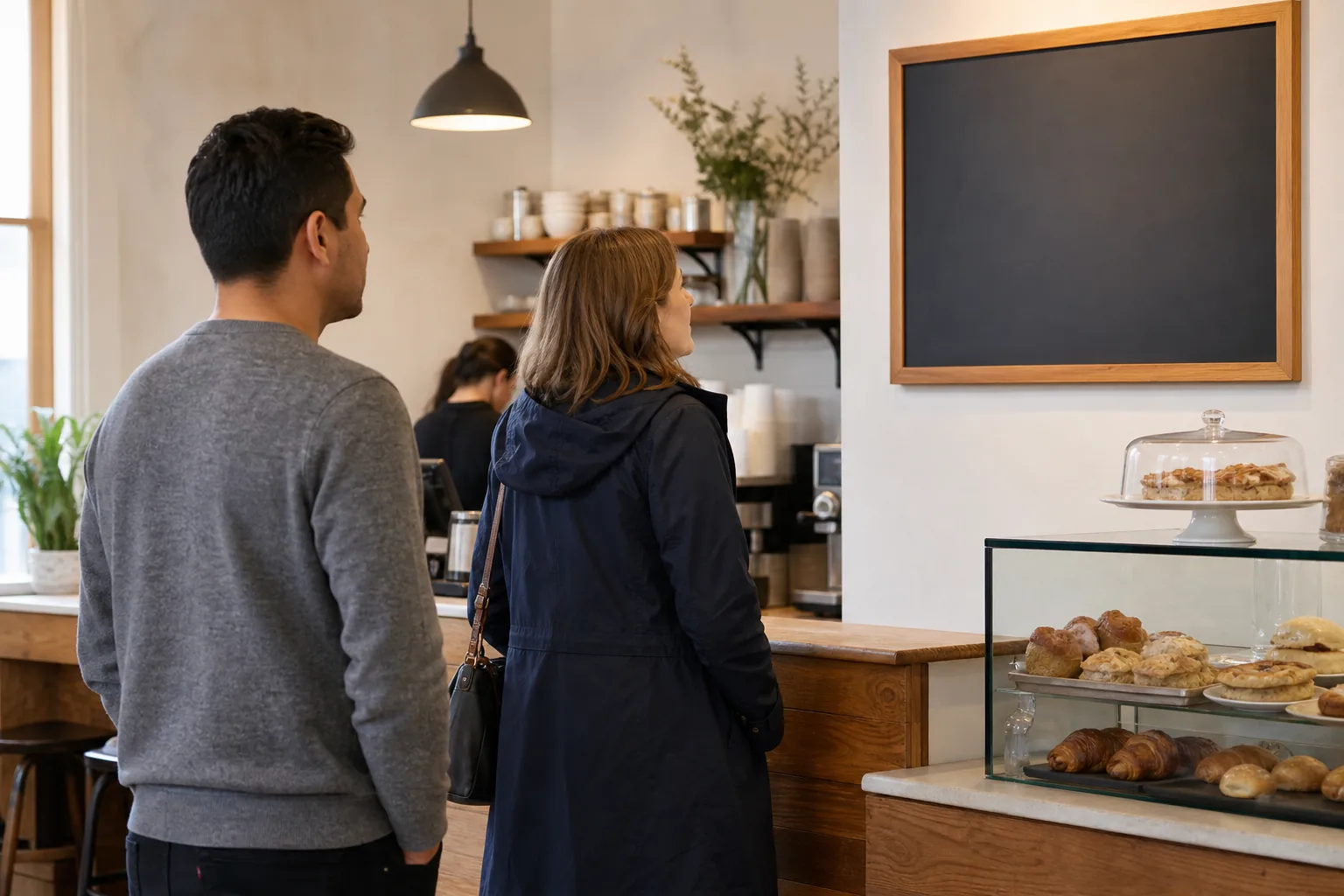
Most delays at a cafe counter begin before anyone speaks. Visitors join what looks like a line, then discover they were standing beside the pastry case. They reach the till without finishing the board. They stay at the wood after paying and miss the name called behind their shoulder. The drink is rarely the problem. The sequence is.
Regulars move through that sequence without explaining it. They already know where the queue is honest, when to decide, and where to wait. This article maps those quiet habits so a first visit does not stall the room. The tone is practical: mornings can be tight, boards can be hard to read, and names get misheard even when everyone is trying.
Find the real queue before you claim a spot
Stand where the line actually feeds the till, not where the doorway feels comfortable. In many rooms the true queue hugs the pastry case or a mark on the floor, while the entrance collects people who are still deciding. Joining the entrance cluster feels polite and still blocks the door. Step fully inside the working line, or fully outside until you are ready.
Watch one full cycle if the room is new to you. See where people stop reading. See where they place bags while they wait. See whether the shelf is left or right of the till. Thirty seconds of observation saves minutes of apology later.
The counter rewards people who arrive decided and leave the till clear.
Finish the board while you still have time
Use the wait to finish the menu. Changing your mind at the till forces everyone behind you to restart. Have size, milk, and a clear name ready. Questions about specials belong to the person already being served, not to the whole line. If the chalkboard is small or crowded, step closer only when you are next, then return to your place without cutting.
Some rooms start the cup while you are still one person back. That is why hesitation at the wood feels so costly. You are not only delaying speech. You are delaying a drink that may already be in motion.
Signals that the line is about to move
- The person ahead closes a wallet or phone and faces the barista fully.
- A cup lands on the shelf and someone turns away from the till to collect it.
- Staff glance past the current guest to confirm the next order is ready to hear.
Pay, then leave the till on purpose
- Give the order and the name without lingering on options you already rejected.
- Complete payment without unpacking the bag on the counter.
- Move to the waiting mark the room is using that morning.
- Face the pickup shelf and listen for the call yourself.
- Take only the cup that matches, then clear the ledge for the next drink.
Staying at the till after paying is the most common visitor mistake. It feels efficient because you are close to staff, yet it blocks the next order and pulls your attention away from the shelf. The waiting spot may be a strip of floor, a side wall, or a gap by the sugar station. Go there even if it feels less important than the counter.
Watch the shelf as a shared surface
Names get swapped. Cups land on the left, then the right. Nobody will escort you to your drink. Keep your body oriented to the ledge. If two cups look alike, wait for the call or ask once without reaching across someone else’s order. The shelf is self-serve attention, not a second queue that entitles you to stand in the middle of the room.
When the cup is yours, leave the collection area quickly. Lid, sleeve, and water can happen a step away. The point is not speed for its own sake. The point is keeping the counter chain intact so the next guest does not inherit your hesitation.
If a room uses a different waiting mark than the one you expected, follow the mark you see that day. Briefs help you rehearse. Staff and signage decide the live order. Reading the line well means arriving ready to adapt without arguing from a printed note.