Takeaway or table: decide before you pay
Takeaway and a table are different commitments. Decide the format before you pay so the cup, the wait, and the exit all match the morning you are actually having.

The choice between takeaway and a table is not a preference you settle after the cup appears. It is a decision about where you will wait, what lid you need, and whether a seat is part of the stop at all. Travelers who change their mind after paying often return to the shelf, cross the room twice, and leave with a format that no longer matches the morning.
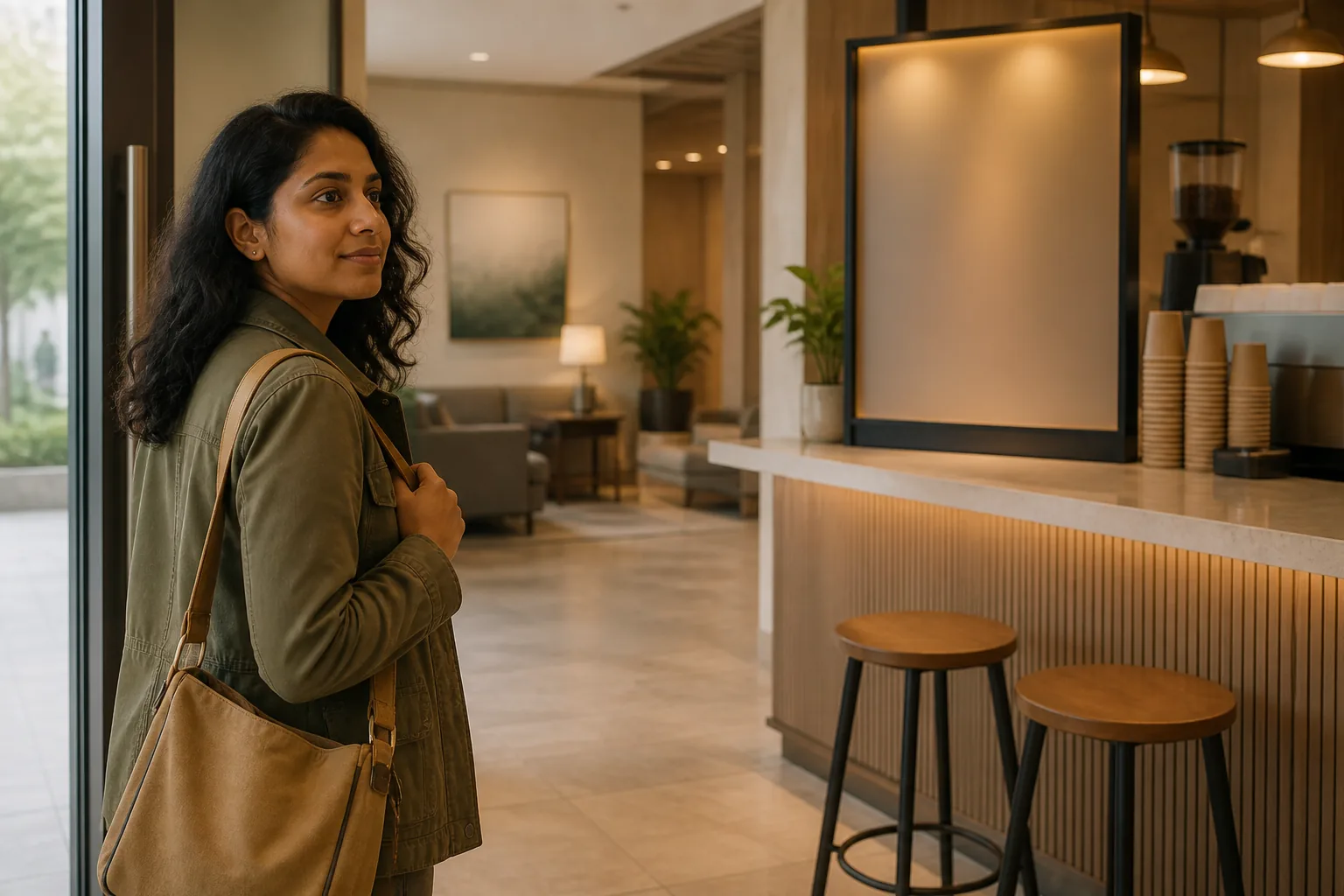
Decide before you reach the till. A lid and a carrier mean you will not need a chair. A ceramic cup means you will return it and clear the surface. Mixing those paths mid-order stalls the counter and confuses the pickup ledge for everyone behind you.
What the cup format actually commits you to
Takeaway is a route tool. You order, step aside, collect, and leave. The room expects your body to keep moving toward the door. A short sit is a rest for the shoulders, not a claim on the space. You still watch the shelf if the drink is made for the table, and you still leave while the pause looks brief.
The mistake is treating takeaway as a soft sit with a lid, or treating a table as a desk because the cup arrived in ceramic. Format and behavior have to match. When they do not, bags land on empty chairs and the doorway fills with people rearranging plans they should have finished outside.
Choose the vessel for the next twenty minutes of your route, not for the room you wish you had time to enjoy.
A quick filter before you speak
- Ask whether anyone in the group truly needs a seat right now.
- Check whether free tables exist without claiming one with a jacket.
- Confirm the vehicle can wait only as long as a takeaway pause if the curb is tight.
- Pick lid or ceramic before you reach the wood, then stay with that choice.
Signs you should stay with takeaway
- The doorway is already crowded and a sit would add another layer of luggage.
- Every two-top near an outlet is occupied, and a “short sit” would mean hovering.
- The morning is a driving day and the next leg cannot absorb a stretched pause.
- Children or bags make a table harder to clear quickly for the next guest.
Takeaway is not a lesser option. It is often the cleaner one. You avoid turning a rest into storage, and you keep the room’s tables for people who will use them briefly and leave them clear.
If you do sit, keep the sit short on purpose
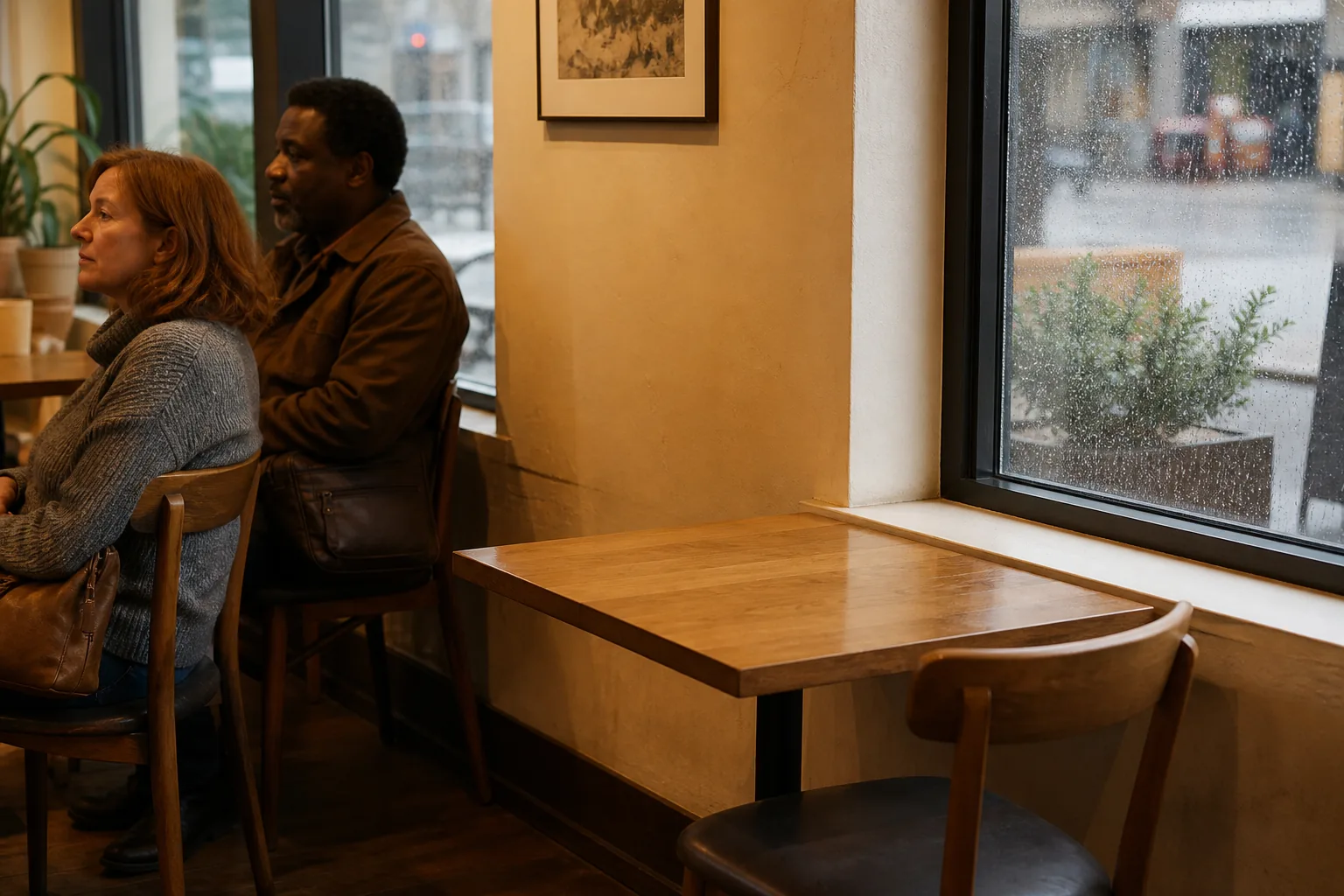
When a table is the right call, sit only after the cup is yours and the till is behind you. Keep bags with you. Do not reserve a second chair. Skip the wall socket if the stop is meant to end with the drink. Leave crumbs cleared and the chair pulled in so the next guest does not inherit your pause as a blockade.
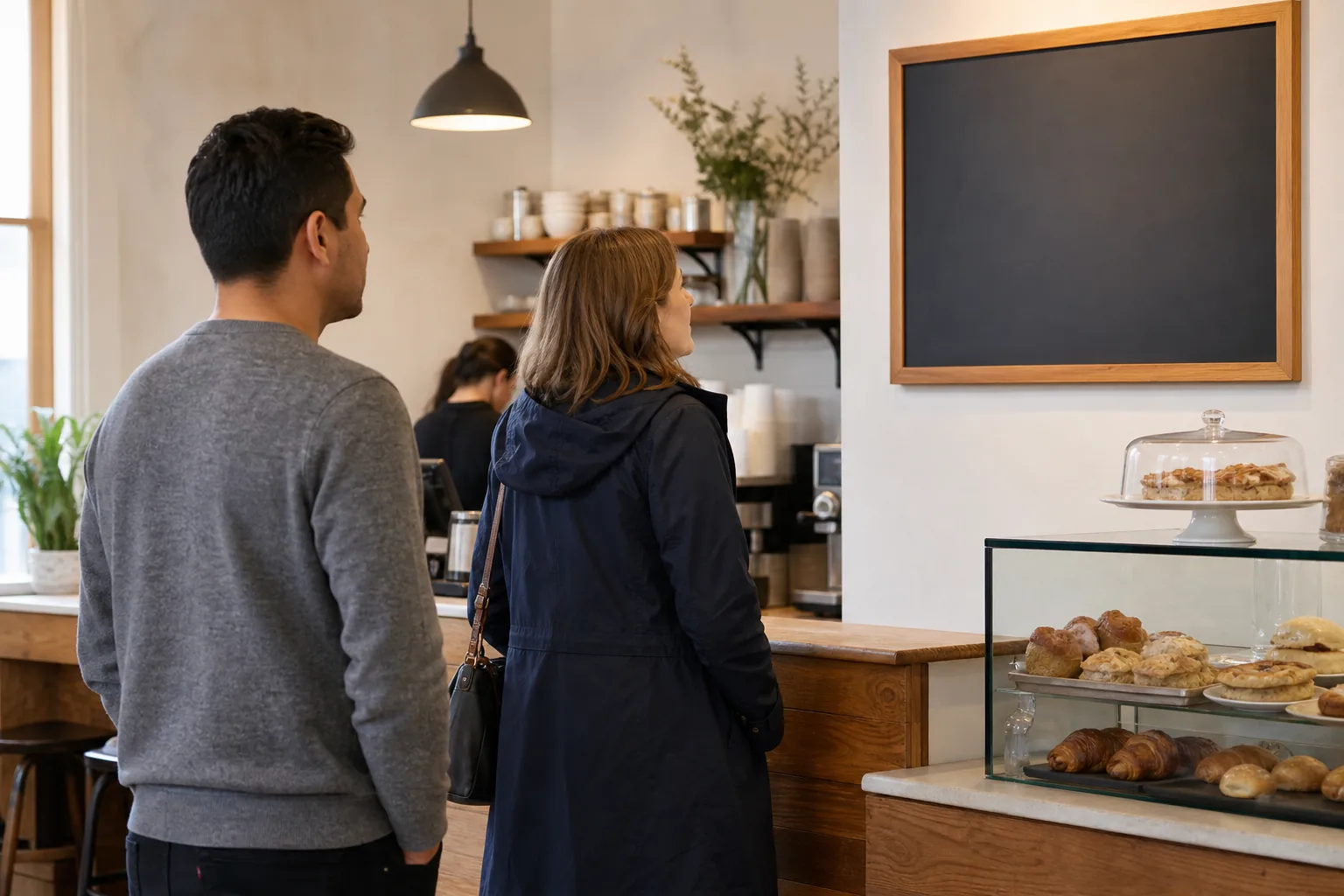
Changing from ceramic to a lid after payment usually means re-entering the shelf traffic. Changing from a lid to a sit means hunting for a table you did not plan for. Both moves cost more than deciding at the board. Finish the format choice while you still have time in line, then let the counter sequence run without a rewrite.
If the group disagrees at the door, settle the format outside before anyone joins the queue. One person can order for the rest once the choice is fixed. That keeps the till from becoming a committee meeting and keeps the morning honest about whether a seat was ever needed.